📻 Listen to Omdaru radio Live

Загрузка ...
Показаны сообщения с ярлыком Fyodor Dostoevsky. Показать все сообщения

понедельник, 1 июля 2024 г.

From Demons 1-2 by FYODOR DOSTOEVSKY rus-eng parallel text-mp3 podcast.mp3 - 202nd BIRTHDAY ANNIVERSARY OF THE RUSSIAN WRITER FYODOR DOSTOEVSKY

new ! 01/07/2024

From Demons 2 by FYODOR DOSTOEVSKY rus-eng parallel text-mp3 podcast.mp3

https://disk.yandex.ru/d/9Ske8oFtfYc3Nw

https://interculturalruen.mave.digital/ep-172

https://vk.com/interculturalruen?w=wall-8630238_3281


– Друг мой, – произнес Степан Трофимович в большом волнении, – savez-vous, это чудесное и… необыкновенное место было мне всю жизнь камнем преткновения… dans ce livre[298] … так что я это место еще с детства упомнил. Теперь же мне пришла одна мысль; une comparaison.[299] Мне ужасно много приходит теперь мыслей: видите, это точь-в-точь как наша Россия. Эти бесы, выходящие из больного и входящие в свиней, – это все язвы, все миазмы, вся нечистота, все бесы и все бесенята, накопившиеся в великом и милом нашем больном, в нашей России, за века, за века! Out, cette Russie, que j’aimais toujours.[300] Но великая мысль и великая воля осенят ее свыше, как и того безумного бесноватого, и выйдут все эти бесы, вся нечистота, вся эта мерзость, загноившаяся на поверхности… и сами будут проситься войти в свиней. Да и вошли уже, может быть! Это мы, мы и те, и Петруша… et les autres avec lui,[301] и я, может быть, первый, во главе, и мы бросимся, безумные и взбесившиеся, со скалы в море и все потонем, и туда нам дорога, потому что нас только на это ведь и хватит. Но больной исцелится и «сядет у ног Иисусовых»… и будут все глядеть с изумлением… Милая, vous comprendrez après,[302] а теперь это очень волнует меня… Vous comprendrez après… Nous comprendrons ensemble.[303]

С ним сделался бред, и он наконец потерял сознание.


"My friend," Stepan Trofimovich said in great excitement, "savez-vous, this wonderful and... extraordinary passage has been a stumbling block for me all my life... dans ce livre ... so that I have remembered this passage ever since childhood. And now a thought has occurred to me; une comparaison. Terribly many thoughts occur to me now: you see, it's exactly like our Russia. These demons who come out of a sick man and enter into swine—it's all the sores, all the miasmas, all the uncleanness, all the big and little demons accumulated in our great and dear sick man, in our Russia, for centuries, for centuries! Oui, cette Russie que j'aimais toujours.[ccxi] But a great will and a great thought will descend to her from on high, as upon that insane demoniac, and out will come all these demons, all the uncleanness, all the abomination that is festering on the surface... and they will beg of themselves to enter into swine. And perhaps they already have! It is us, us and them, and Petrusha. . . et les autres avec lui,[ccxii] and I, perhaps, first, at the head, and we will rush, insane and raging, from the cliff down into the sea, and all be drowned, and good riddance to us, because that's the most we're fit for. But the sick man will be healed and 'sit at the feet of Jesus'... and everyone will look in amazement... Dear, vous comprendrez après, but it excites me very much now... Vous comprendrez après... Nous comprendrons ensemble, "[ccxiii]

He became delirious and finally lost consciousness. 

***

https://vk.com/interculturalruen?w=wall-8630238_3116

 https://interculturalruen.mave.digital/ep-160

From Demons by FYODOR DOSTOEVSKY rus-eng parallel text-mp3 podcast.mp3

https://disk.yandex.ru/d/UcW6S9g08Q63Pw

Get the pdf transcripts for rus-eng podcasts
 at Interculturalruen.mave.digital

Купить все мои русско-английские подкасты- скачать mp3+pdf-txt-doc-источники

https://en.wikipedia.org/wiki/Demons_(Dostoevsky_novel)


понедельник, 23 января 2023 г.

The New Yorker: Rereading Russian Classics in the Shadow of the Ukraine War by Elif Batuman

 https://www.newyorker.com/magazine/2023/01/30/rereading-russian-classics-in-the-shadow-of-the-ukraine-war

Rereading Russian Classics in the Shadow of the Ukraine War

The New Yorker · by Elif Batuman · January 23, 2023


***

(Russian literature curricula are already changing, in the wake of the Ukraine war. The Association for Slavic, East European, and Eurasian Studies, a leading professional organization, has dedicated its 2023 conference to the theme of decolonization.)

In Tbilisi, it seemed clear that the Russian Empire had required vast resources of imagination to build and to sustain—and that my favorite novels might have played a role. In “Eugene Onegin,” I kept coming back to Tatiana’s husband, a war hero “maimed in battle.” Though mentioned only briefly, he’s the catalyst for Tatiana’s transformation—the reversal that makes Onegin fall in love with her. We never do learn whom the general himself may have maimed. The maiming that we do see: Tatiana gazing emotionlessly at Onegin; Onegin corpselike and grovelling, as the general’s spurs clink in the hallway. Tatiana reminded me now of the Circassian girl in “Prisoner of the Caucasus,” who also loves in vain, until she aligns herself in a self-annihilating way with the interests of the Russian Empire. And wasn’t that Pushkin’s arc, too? Tatiana wrote a rash declaration to Onegin; Pushkin wrote a rash ode to freedom. Tatiana became the social queen of St. Petersburg, Pushkin its foremost poet.

As for “Anna Karenina,” it really does start where Onegin ends: with a flawlessly dressed heroine married to an influential imperialist. The tension between center and periphery is woven into the plot. The character of Karenin, a statesman involved in the resettlement of the “subject races,” turns out to be partly based on Pyotr Valuev, the Minister of the Interior from 1861 to 1868. Valuev oversaw the Russian appropriation of Bashkir lands around the Ural Mountains—and also issued a notorious decree restricting the publication of Ukrainian-language educational and religious texts throughout the Empire. (It reads, in part, “A separate Little Russian language never existed, does not exist, and shall not exist.”)

Unlike Tatiana, Anna doesn’t remain faithful to her empire-building husband. She leaves Karenin for Vronsky, who turns down a prestigious military post in Tashkent in order to travel with her to Italy. But the Imperial Army gets Vronsky back in the end. That final image of Anna’s lifeless head is actually a flashback Vronsky has, on his way to join a Pan-Slavic volunteer detachment fighting the Ottomans in Serbia. With Anna dead, and the love plot over, his only desire is to end his own life, and to kill as many Turks as possible in the process. To quote a recent think piece titled “Decolonizing the Mysterious Soul of the Great Russian Novel,” by Liubov Terekhova—a Ukrainian critic who was reassessing “Anna Karenina” from the United Arab Emirates, as Russia bombed her home city, Kyiv—“Russia is always waging a war where a man can flee in search of death.” 

read the full text   Rereading Russian Classics - Elif Batuman.epub

воскресенье, 8 ноября 2015 г.

Russian classical literature translated by Richard Pevear and Larissa Volokhonsky

Russian classical literature 
скачать архив из облака
Русская жена и ее муж американец уже 25 лет переводят русскую классику очень необычным способом. Лариса делает буквальный подстрочник своим русским английским, а Ричард переписывает на хорошем английском, затем Лариса просматривает его вариант, сравнивает с оригиналом, добавляет свои замечания и исправления, затем Ричард снова это переписывает до тех пор, пока Лариса не увидит максимального соответствия. Многие считают эти переводы самыми адекватными, а многие ругаются на корявый русский английский, элементы которого все равно остаются в переводах и максимально приближенно передают, например, небрежный стиль Достоевского или повторы Толстого. А мне эти переводы очень нравятся, я чувствую в них русскую душу. См. мои русско-английские подкасты их переводов Чехова, фрагмент из Доктора Живаго Пастернака, фрагмент из Идиота Достоевского, фрагмент из Анны Карениной Толстого, фрагмент из Войны и мира Толстого, фрагмент из Мастер и Маргариты Булгакова, главы 1-2 из Мастер и Маргариты Булгакова

Bulgakov_The-Master-and-Margarita.mobi
Chekhov_Selected-Stories-of-Anton-Chekhov.mobi
Chekhov_The-Complete-Short-Novels.mobi
Dostoyevsky_Crime-and-Punishment.mobi
Dostoyevsky_Demons.mobi
Dostoyevsky_Notes-from-Underground.mobi
Dostoyevsky_The-Adolescent.mobi
Dostoyevsky_The-Brothers-Karamazov.mobi
Dostoyevsky_The-Double.mobi
Dostoyevsky_The-Eternal-Husband-and-Other-Stories.mobi
Dostoyevsky_The-Gambler.mobi
Dostoyevsky_The-Idiot.mobi
Gogol_Dead-Souls.mobi
Gogol_The-Collected-tales-of-Nikolai-Gogol.mobi
Pasternak_Doctor-Zhivago.mobi
Tolstoy_Anna-Karenina.mobi
Tolstoy_War-and-Peace.mobi


пятница, 9 января 2015 г.

суббота, 18 августа 2012 г.

Selected translations by Constance Garnett


Selected translations by Constance Garnett

В конце 19 века викторианская девушка Констанс влюбилась в русского бомбиста-нигилиста Степняка, который, как уже тогда повелось, сбежал в Лондон, откуда наших не сдают и где он издавал журнал о России. Констанс вышла потом все-таки за другого- чопорного англичанина, но любовь к России у нее осталась на всю жизнь. Она съездила в гости к Толстому , стала учить русский, перевела у него на английский "Царство божие- внутри нас" , да так увлеклась, что не могла остановиться всю жизнь, перевела более 70 томов русской классики- Толстого, Чехова, Достоевского, Тургенева. Родила ребенка, в середине жизни ушла от мужа. Ведь У Констанс была одна любовь- Великая Русская Литература, которую западный мир впервый прочитал в переводах неутомимой Constance Garnett


Selected translations by Constance Garnett mobi zip download


01 Tales of Chekhov-The darling-Garnett.mobi
02 Tales of Chekhov The duell-Garnett.mobi
03 Tales of Chekhov The lady with the dog-Garnett.mobi
04 Tales of Chekhov The party-Garnett.mobi
05 Tales of Chekhov The Wife-Garnett.mobi
06 Tales of Chekhov The witch-Garnett.mobi
07 Tales of Chekhov The bishop-Garnett.mobi
08 Tales of Chekhov-The chorus-girl-Garnett.mobi
09 Tales of Chekhov The schoolmistress-Garnett.mobi
10 Tales of Chekhov The horse-stealers-Garnett.mobi
11 Tales of Chekhov-The schoolmaster-Garnett.mobi
12 Tales of Chekhov The cooks-wedding-Garnett.mobi
13 Tales of Chekhov Love-Garnett.mobi
1894 Goncharov A common story.mobi
1894 Tolstoy_The_Kingdom_of_God_Is_Within_You.mobi
1894 Turgenev_A_House_of_Gentlefolk.mobi
1894 Turgenev_Rudin.mobi
1895 Turgenev_A_Sportsmans_Sketches.mobi
1895 Turgenev_Fathers_and_Children.mobi
1895 Turgenev_On_the_Eve.mobi
1897 Turgenev_Dream_Tales_and_Prose_Poems.mobi
1897 Turgenev_The_Torrents_of_Spring._First_love._Mumu.mobi
1898 Turgenev_A_Lear_of_the_Steppes_and_Other_Stories_Garnett.mobi
1899 Ostrovsky_The_Storm.mobi
1899 Turgenev_A_Desperate_Character_and_Other_Stories.mobi
1899 Turgenev_The_Diary_of_a_Superfluous_Man_and_Other_Stories.mobi
1900 Turgenev_The_Jew_and_Other_Stories.mobi
1901 Tolstoy_Anna_Karenina.mobi
1912 Dostoevskiy_The_Brothers_Karamazov.mobi
1913 Dostoevskiy_The_Possessed.mobi
1914 Dostoevsky_Crime_and_Punishment_.mobi
1915 Dostoevskiy_The_Insulted_and_the_Injured.mobi
1916 Dostoevskiy_A_Raw_Youth.mobi
1917 Dostoevskiy_The_Double.mobi
1917 Dostoevsky_A_Gentle_Spirit.mobi
1917 Dostoevsky_The_Gambler_and_other_stories._Poor_People._The_Landlady.mobi
1918 Dostoevskiy_White_Nights_and_Other_Stories.mobi
1920 Chekhov Selected letters.mobi
1922 Turgenev_Knock_Knock_Knock_and_Other_Stories.292738.fb2.mobi
1923 Chehov_Selected_plays.mobi
1934 Turgenev_A_Month_in_the_Country-Garnett.mobi


Full list of translations
http://www.eldritchpress.org/ac/jr/biblo.htm


Constance Garnett mobi zip
 download

Chehov_Selected_plays.mobi
Chehov_Selected_short_stories_-1882-1887-.mobi
Chehov_Selected_short_stories_-1888-1892-.mobi
Chehov_Selected_short_stories_-1892-1895-.mobi
Chehov_Selected_short_stories_-1896-1904-.mobi
Chekhov Selected letters.mobi
Dostoevskiy_The_Brothers_Karamazov.mobi
Dostoevskiy_The_Possessed.mobi
Dostoevsky_Crime_and_Punishment.mobi
Tolstoy_Anna_Karenina.mobi
Tolstoy_The_Kingdom_of_God_Is_Within_You.mobi

download mobi zip

Chekhov Anton- Selected-early-short-stories-1886-Garnett.mobi
Chekhov Anton- Selected-early-short-stories-1887-Garnett.mobi
Chekhov Anton-Selected-early-short-stories-1882-1885-Garnett.mobi 
Chekhov Anton- Selected early plays.mobi


Constance Clara Garnett (née Black) (19 December 1861, Brighton, England – 17 December 1946, The Cearne, Crockham Hill, Kent) was an English translator of nineteenth-century Russian literature. Garnett was one of the first English translators of Leo Tolstoy,Fyodor Dostoyevsky and Anton Chekhov and introduced them on a wide basis to the English-speaking public.


LIFE

Garnett was the sixth of the eight children of the solicitor David Black (1817–1892), afterwards town clerk and coroner, and his wife, Clara Maria Patten (1825–1875). Her brother was the mathematician Arthur Black.[1] Her father became paralysed in 1873, and two years later her mother died, from a heart attack after lifting him from his chair to his bed.[2]
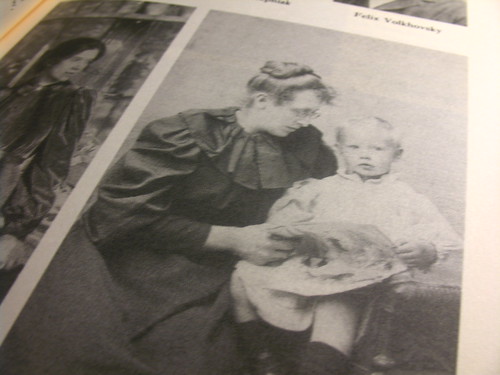
She was initially educated at Brighton and Hove High School. Afterwards she studied Latin and Greek at Newnham College, Cambridge on a government scholarship, where she also learned Russian (partly from émigré Russian friends such as Felix Volkonsky), and worked briefly as a school teacher.
Her husband, Edward Garnett, whom she married in Brighton on 31 August 1889, was a distinguished reader for the publisher Jonathan Cape. Her son and only child,David Garnett, trained as a biologist and later wrote novels.
In 1893, shortly after a visit to Moscow, Saint Petersburg and Yasnaya Polyana where she met Leo Tolstoy, she was inspired to start translating Russian literature, which became her life's passion and resulted in English-language versions of dozens of volumes by Tolstoy, Gogol, Ivan Goncharov, Dostoevsky, Pushkin, Turgenev,Ostrovsky and Chekhov. The Russian anarchist Sergei Stepniak partly assisted her, also in revising some of her early works.

By the late 1920s, Garnett was frail, white-haired, and half-blind. She retired from translating after the publication in 1934 of Three Plays by Turgenev. After her husband's death in 1937, she became quite reclusive. She developed a heart condition, with attendant breathlessness, and in her last years had to walk with crutches.

TRANSLATIONS

Constance Garnett translated 71 volumes of Russian literary works, and her translations received high acclaim, from authors such as Joseph Conrad and D. H. Lawrence. Despite some complaints about being outdated, her translations are still being reprinted today (most also happen to be in the public domain).
However, Garnett also has had many critics, notably prominent Russian natives and authors Vladimir Nabokov and Joseph Brodsky. Brodsky notably criticized Garnett for blurring the distinctive authorial voices of different Russian authors:[2]
"The reason English-speaking readers can barely tell the difference between Tolstoy and Dostoevsky is that they aren't reading the prose of either one. They're reading Constance Garnett."
In her translations, she worked quickly, and smoothed over certain small portions for "readability", particularly in her translations of Dostoevsky.[3] In instances where she did not understand a word or phrase, she omitted that portion.[2][4]
For his Norton Critical Edition of The Brothers Karamazov, Ralph Matlaw based his revised version on her translation.[5] This is the basis for the influential A Karamazov Companion by Victor Terras.[6] Matlaw published an earlier revision of Garnett's translation of the Grand Inquisitor chapter in a volume paired withNotes From Underground.[7]
In 1994 Donald Rayfield compared Garnett's translations with the most recent scholarly versions of Chekhov's stories and concluded:
"While she makes elementary blunders, her care in unravelling difficult syntactical knots and her research on the right terms for Chekhov's many plants, birds and fish are impressive.... Her English is not only nearly contemporaneous to Chekhov's, it is often comparable."[8]
Her translations of Turgenev were highly regarded by Rachel May, in her study on translating Russian classics.
Later translators such as Rosemary Edmonds and David Magarshack continued to use Garnett's translations as models for their own work.[4][9]
***
British translator, born in Brighton, educated at Newnham College, Cambridge. A member of the Fabian Society, she worked as librarian at the People's Palace in the East End of London. In 1889 she married Edward Garnett, through whom she met Peter Kropotkin and other exiled Russian revolutionaries. From them she learned Russian in the months before the birth of her son, David Garnett, in 1892. The following year she made her first journey to Russia, bearing money for the relief of famine in Nizhniy Novgorod and secret communications from her Russian friends in London; she met Tolstoy at Yasnaya Polyana. Upon returning to Britain, she began her monumental endeavour of translating some seventy volumes of Russian prose, including all the novels of Dostoevsky, Gogol, and Turgenev and most of the plays and stories of Chekhov. Her work did much to bring about the widespread influence of the Russian novel on English literature in the early decades of the twentieth century


Garnett translated 73 volumes of Russian literature, which included Tolstoy, Turgenev, Dostoevsky, Gogol, Herzen and many others, but translating Chekhov gave her more pleasure than any other work. Chance put her on the life-long path for which she was suited. In 1892, with her fiancé Edward Garnett, she went to Bedford Park to meet Volkhovsky, a revolutionary who had escaped from Russia and was editing an émigré journal called Free Russia. His pen name was Stepniak – a man of the steppe. Constance fell "not a little in love with him" and, providing her with a grammar and dictionary, he suggested she translate "those splendid Russians". It was a prodigious undertaking for a Victorian Englishwoman who had been a librarian in the East End of London. Her husband helped her with publication, ensuring that the editions be both inexpensive and available to young people. In time they lived separately; but as might a Russian heroine, she wrote to Edward: "Keep a warm heart to me – independence doesn't go very far."
In his life of her, her grandson Richard Garnett describes her, alone in her stone house in Kent, translating and tending her garden; she loved plants almost as much as she loved language. Her life was frugal, her dresses "unambitious", her one seeming luxury a Valor stove with two paraffin wicks, which her adored son, David Garnett, had bought for her. 

***


The Translation Wars

HOW THE RACE TO TRANSLATE TOLSTOY AND DOSTOYEVSKY CONTINUES TO SPARK FEUDS, END FRIENDSHIPS, AND CREATE SMALL FORTUNES.

by 


 ( THE NEW YORKER)


...
As a literary achievement, Garnett’s may have been of the second order, but it was vast. With her pale, watery eyes, her gray hair in a chignon, she was the genteel face of tireless industry. She translated seventy volumes of Russian prose for commercial publication, including all of Dostoyevsky’s novels; hundreds of Chekhov’s stories and two volumes of his plays; all of Turgenev’s principal works and nearly all of Tolstoy’s; and selected texts by Herzen, Goncharov, and Ostrovsky. A friend of Garnett’s, D. H. Lawrence, was in awe of her matter-of-fact endurance, recalling her “sitting out in the garden turning out reams of her marvelous translations from the Russian. She would finish a page, and throw it off on a pile on the floor without looking up, and start a new page. That pile would be this high—really, almost up to her knees, and all magical.”

Without Garnett, the nineteenth-century “Rooshians,” as Ezra Pound called them, would not have exerted such a rapid influence on the American literature of the early twentieth. In “A Moveable Feast,” Hemingway recounts scouring Sylvia Beach’s shelves for the Russians and finding in them a depth and accomplishment he had never known. Before that, he writes, he was told that Katherine Mansfield was “a good short-story writer, even a great short-story writer,” but now, after reading Chekhov, she seemed to him like “near-beer.” To read the Russians, he said, “was like having a great treasure given to you”:

In Dostoevsky there were things believable and not to be believed, but some so true they changed you as you read them; frailty and madness, wickedness and saintliness, and the insanity of gambling were there to know as you knew the landscape and the roads in Turgenev, and the movement of troops, the terrain and the officers and the men and the fighting in Tolstoy. Tolstoy made the writing of Stephen Crane on the Civil War seem like the brilliant imagining of a sick boy who had never seen war but had only read the battles and chronicles and seen the Brady photographs that I had read and seen at my grandparents’ house. 


Among the most astringent and authoritative critics of Garnett were Russian exiles, especially Vladimir Nabokov and Joseph Brodsky. Nabokov, the son of a liberal noble who was assassinated at a political conference, left Russia in 1919. He lived in Europe until 1940, when he came to the United States. In “Lectures on Russian Literature,” there is a facsimile of the opening pages of his teaching copy of the Garnett “Anna Karenina.” On the blank left-hand page, Nabokov has written a quotation from Conrad, who told Garnett’s husband, Edward, “Remember me affectionately to your wife, whose translation of Karenina is splendid. Of the thing itself I think but little, so that her merit shines with greater lustre.” Angrily, Nabokov scrawls, “I shall never forgive Conrad this crack”—he ranks Tolstoy at the top of all Russian prose writers and “Anna” as his masterpiece—and pronounces Garnett’s translation “a complete disaster.” Brodsky agreed; he once said, “The reason English-speaking readers can barely tell the difference between Tolstoy and Dostoevsky is that they aren’t reading the prose of either one. They’re reading Constance Garnett.”
Garnett’s flaws were not the figment of a native speaker’s snobbery. She worked with such speed, with such an eye toward the finish line, that when she came across a word or a phrase that she couldn’t make sense of she would skip it and move on. Life is short, “The Idiot” long. Garnett is often wooden in her renderings, sometimes unequal to certain verbal motifs and particularly long and complicated sentences. The typescripts of Nabokov’s lectures, which he delivered while teaching undergraduates at Wellesley and Cornell, are full of anti-Garnett vitriol; his margins are a congeries of pencilled exclamations and crabby demurrals on where she had “messed up.” For example, where a passage in the Garnett of “Anna” reads, “Holding his head bent down before him,” Nabokov triumphantly notes, “Mark that Mrs. Garnett has decapitated the man.” When Nabokov was working on a study of Gogol, he complained, “I have lost a week already translating passages I need in ‘The Inspector General’ as I can do nothing with Constance Garnett’s dry shit.”
A less imperious but no less discerning critic, Kornei Chukovsky (who was also a famous writer of children’s books), esteemed Garnett for her work on Turgenev and Chekhov but not for her Dostoyevsky. The famous style of “convulsions” and “nervous trembling,” he wrote, becomes under Garnett’s pen “a safe blandscript: not a volcano, but a smooth lawn mowed in the English manner—which is to say a complete distortion of the original.”
Garnett (1862-1946) was one of eight children. Her father was paralyzed, and when Constance was just fourteen her mother died of a heart attack from the exertion of hoisting her husband from chair to bed. Constance won a scholarship to read classics at Newnham College, Cambridge, and after graduation she married a publisher, Edward Garnett, the scion of a family of English literary aristocrats.
When the Garnetts were setting up housekeeping, Edward began to invite various Russian exiles as weekend guests. Constance was entranced by their stories of revolutionary fervor and literary ferment. In 1891, when she was confined with a difficult pregnancy, she began to learn Russian. Soon, she tried her hand at translating minor pieces, beginning with Goncharov’s “A Common Story” and Tolstoy’s “The Kingdom of God Is Within You” and then moving on to her favorite of the Russians, Turgenev. In 1894, she left behind her infant son and her husband and made a three-month trip to Russia, where she drove long distances through snowstorms by sleigh, visited experimental schools, and dined with Tolstoy at his estate.
When Garnett returned to England, she began an ascetic lifelong routine of housekeeping, child-rearing, and translating. Mornings, she made porridge for her son David, and then, according to her biographer Carolyn Heilbrun, “she would go round the garden, while the dew was still on the plants, to kill the slugs; this was a moment of selfindulgence.” Garnett was a sickly woman, suffering from migraines, sciatica, and terrible eyesight, and yet her ailments did not deter her from working as a translator. She turned down an offer from Tolstoy’s close friends Louise and Aylmer Maude to collaborate on a translation of “War and Peace” and did it on her own. (So, too, did the Maudes, her only rival in Tolstoy.) Garnett went nearly blind working on “War and Peace.” She hired a secretary, who read the Russian text to her aloud; Garnett would dictate back in English, sometimes grabbing away the original text and holding it a few inches from her ailing eyes.
Hemingway recalls telling a friend, a young poet named Evan Shipman, that he could never get through “War and Peace”—not “until I got the Constance Garnett translation.” Shipman replied, “They say it can be improved on. I’m sure it can, although I don’t know Russian.”

InterculturalRUEN.mave.digital

Архив блога

Поиск по этому блогу

Tags

2018 World Cup 3D reading 7 Quotes - Intercultural Russian-English Profile активная грамматика активное слушание активный словарный запас английский и ИИ Апресян аудирование Влад Воробьев Гивенталь деловой английский детский английский ИИ-английский интернет-радио Константин Белобородов контекстный перевод коучинг по английскому массовая культура межкультурная коммуникация мобильное интернет-ТВ модальные глаголы мультсериал начинающие НБАРС нейросеть Облако-Mail.ru Олег Петров параллельные тексты перевод нейросети подкасты полнотекстовый поиск понимание просмотр фильмов на английском с опорой на словари прямой эфир разговорники рассылка расширение активного словарного запаса речевые модели скайп-тренинг словари слушание Современные записки Влада В. ссылки недели статистика Permlive Radio Татьяна Тутынина ТВ онлайн тематический словарь трехмерное чтение учебные материалы частотные слова электронные книги на английском энциклопедии AAC+ Abundance academic vocabulary active dictionaries active English active grammar active vocabulary advanced examples advanced grammar advanced patterns advanced vocabulary adventure film affirmation Africa Agatha Christie AI AiArt Al Jazeera Alain de Botton Alan Milne Alcyone Alexander Men' Alexander Pushkin aliens Alla Pugacheva Alreader Altai Amara.org Amazon Video american cinema american culture American English american frequent words american history american life American literature american politics American radio american tv Ancient Aliens ancient Rome Andrey Kneller Andrey Zubov Android animation Anton Chekhov Archangel Metatron Archangel Michael Archetype Archive.org art Atman ATOM audiobooks augustus awe Balabolka ballet Barak Obama basic active vocabulary BBC BBC English BBC Four BBC Learning English BBC News BBC One BBC podcasts BBC radio BBC REEL BBC Three BBC TV BBC Two BBC World BBC World Service Radio Beatitudes beginners Benedict Cumberbatch Bible Big Soviet Encyclopedia Bloomberg BlueDict Bolshoi Booker Prize Boosty.to/Omdaru Boris Akunin Boris Pasternak brainpickings.org Britannica british animation british cinema British council british english british history British literature British TV Brockhaus Buddha Bulgakov business business english business quotes Buy all my RU-EN podcasts- Купите все мои РУС-АНГЛ подкасты Byrne Caiaphas cambridge Cambridge Business Cambridge English Corpus Cambridge Learner's Dictionary English-Russian Career English Cassiopeia cassiopeia. russian spirits Cayce CBBC CBC CBeebies CBS Central America Chaitanya Channel 4 channeling ChatGPT Chekhov Chernikhovskaya chess chick-lit Chico Xavier childen children children's literature China chm christianity Christmas Cicero citizen journalism civilisation claude.ai Click CNBC CNN coaching COCA Collins Collins Cobuild collocations Columbia encyclopedia comedy-drama commandments Consciousness Constance Garnett context dictionary cooking coronavirus courses culture death Deepseek DeepSeek retelling design detective story dictionaries dictionary Dispenza Dmitry Bykov Doctor Who docudrama donation to Russian World Citizens Project Dostoevsky dramatizations Dream Media English Club DW ebooks ebooks in English ego elibrary Elizabeth II email-рассылка Emily Wilson emotions Encarta encyclopedia English Club TV English language english literature english subtitles enlightenment entertainment ereader errors ESL ESL audio ESL Links ESL video Esperante radio Esperanto essays Eugene Onegin Eurasianism Euronews examples exams Extra English extraterrestrial civilizations Facebook Live Family English fantasy fascism fb2 FBreader fear feelings fiction in English Files of the week Filmon.TV Films films in English with english subtitles financial energy Flipboard folklore food Fox news Fox TV France France 24 French literature french-english podcasts frequency frequent words Friends future Fyodor Dostoevsky Gabriel Gagarin Radio Game of thrones german history German literature german TV global issues Glosbe god Goddard Neville Goldendict good luck Google dictionary Google Podcasts google translate grammar grammar patterns gulag Hamatata.com happiness Harry Potter HBO Higher Self highlights of the year 2011 history History channel Hollywood Holy Spirit Homer horror House of the Dragon human origins hybrid literature ideas idioms IELTS imperialism India innovation inspirational quotes Intercultural RU-EN Intercultural RU-EN 24 Intercultural Ru-EN LIVE Intercultural RU-EN Youtube Channel Intercultural Youtube News Mix intermediate grammar intermediate vocabulary internet radio iOS IPTV Ireland IT Italian literature ITV Ivan Bunin J.H.Lowenfeld James Falen Jane Austen Jesus Jesus Christ job interview Joe Vitale Joehle John O'Donohue John O’Donohue John of Kronstadt John Randolph Price Joseph Brodsky Josiah journalism Judas kids Kindle Kindle Paperwhite King David Kiwix korean cinema Krishna learner's dictionaries Leo Tolstoy Lingualeo Linguee Lingvo Links List.ly listening literature live radio Live TV London Live TV Longman Longman Business love Lucifer Lyudmila Ulitskaya m3u machine translation Macmillan Magicscope Magicscope PermLIVE Mastodon Match-Point MDict MDX dictionaries media coach meditation Merriam-Webster Messing Metacritic Michele Berdy Microsoft Mikhail Bulgakov Milne mistakes mobi mobile dictionaries Mobile films mobile podcasts Mobile TV Moses Mosfilm motivational quotes motoring mp3 courses MSNBC multimedia Multiran musical Mystery Natural grammar nature photography NBC Netflix neural translation News News English News with subtitles Nikolai Gogol Nobel Lecture Nobel Prize nonfiction NPR OED Omdaru English Media Club Omdaru literature Omdaru radio online films in English online TV Open Russia opera Ororo.tv Orwell Osip Mandelstam Oxford Oxford Advanced Learner's Dictionary Oxford Basic American dictionary Oxford Business Oxford Learner's Wordfinder Dictionary Oxford Living English Dictionaries painting parallel texts Pasternak Paul PBS Peppa Pig Permlive Internet Radio Project Permlive radio PermLIVE.Info Permlive.TV World Magazine PetroFFEnglish Pevear-Volokhonsky philosophy phrasal verbs phrase books Pilate Pixar podcasts podster.fm poetry Political novel Portable positive psychology post-apocalyptic prayer pre-intermediate pre-intermediate grammar presentations project management propaganda Prophet Enoch Prosperity Psalms psychology Public Folder Putinism quotations radio radio in English reincarnation Renan Reuters TV Reverso Context Richard Pipes Robert Harris Roman Empire Rowling RSS Russia Russia in English Russia Today Russian russian archetype russian art russian cinema russian collocations russian culture russian empire russian frequent words russian grammar russian history russian jews Russian language russian life - quotes Russian literature Russian music russian nationalism russian opera russian painting Russian poetry russian politics russian radio russian revolution russian subtitles russian TV russian usage Russian World Citizens Live TV Russian World Citizens Project Russian World Citizens Project Links 2012-2019 russian-english audibooks russian-english dictionary russian-english parallel texts russian-english phrase books russian-english podcasts russian-english translation russian-german podcasts Sathya Sai Baba sci-fi science science fiction Shakespeare Sherlock short story Siberia Simple English sitcom Sky News slang SLOVO Slow TV Sophie Kinsella soul sound examples soviet art soviet cinema soviet history Soviet life soviet music soviet sci-fi Soviet Union spanish cinema speech patterns spirit spiritism spirits spirituality spoken english Spoken examples Spotify spy thriller Sri Chinmoy Stalin stalinism Stephen Fry Strugatsky Student News subasub.com subscribe.ru supernatural Svetlana Alexievich Svetlanov synonyms Taiga Tarkovsky Tatoeba-предложения в переводе Tchaikovsky Tcherniakov technology TED teen drama Telegram Terry Gross text-to-speech The Best of 2019 links The Best of 2020 links The Great Soviet Encyclopedia the Idiot The Master and Margarita The Moscow Times The New Testament The New York Review of Books The New York Times The New Yorker The News The Philosopher's Mail The Russian World Citizens Times The School of life The Secret theatre thematic dictionary thesaurus This American life thought thriller time time travel TOEFL Tolkien Tolstoy Torrent TV torrents tourism training translation translations True Self trumpism TV documentaries TV in English TV series tyranny UFO UK UK TV Live Universalis universe Upper-intermediate grammar Urantia Urban Dictionary usage USSR Vasabi.tv Vice News video Video News visual dictionary visual grammar Vladislav Vorobev VOA Learning English VOA special English vocabulary vocabulary.com VPN Vysotsky walsch Walt Disney War and Peace Wednesday Wikipedia wikitaxi Williamson Win-Win News Win-Win radio Windows Winnie-the-Pooh Woland wonder Wordnet WorkAudioBook-audioplayer with subtitles World Book World News Yahweh Yourmuze.FM Youtube Youtube vblogger Zhivago Zoom coaching Zoroaster