Показаны сообщения с ярлыком soviet history. Показать все сообщения

понедельник, 6 февраля 2023 г.

Andrey Zubov: Reasons for the Russian catastrophe of the 20th century and possibilities to overcome it. “History of Russia. XX Century”

 https://www.em.muni.cz/en/news/15876-roots-of-russia-s-catastrophes-lie-in-its-history-says-zubov


From Wednesday 19 October, the famous Russian historian Andrey Borisovich Zubov teaches a six-week course at Masaryk University titled Reasons for the Russian catastrophe of the 20th century and possibilities to overcome it. Over 100 MU students have signed up for the limited special series of lectures and nearly 4,000 others have already watched the lectures online.

https://en.wikipedia.org/wiki/Andrey_Zubov

  • A.B. Zubov, ed. (2017). История России XX век. Как Россия шла к ХХ веку. От начала царствования Николая II до конца Гражданской войны (1894-1922). (History of Russia. XX Century. Russia's Journey into the XX Century from the beginning of Nicolay II Reign to the End of the Civil War (1894-1922)). Vol. 1 (3000 экз ed.). Moscow: Eksmo. ISBN 978-5-699-89930-2.
  • A.B. Zubov, ed. (2017). История России XX век. Эпоха Сталинизма (1923-1953). History of Russia. XX Century. Stalin's Epoch (1923-1953)). Vol. 2. Moscow: Eksmo. ISBN 978-5-699-92087-7.
  • A.B. Zubov, ed. (2017). История России ХХ век. Деградация тоталитарного государства и движение к новой России (1953 — 2008). (History of Russia. XX Century. Degradation of a Totalitarian State and Movement towards a New Russia (1953 — 2008)). Vol. 3. Moscow: Eksmo. ISBN 978-5-699-93347-1.

https://www.nytimes.com/2009/11/25/arts/25iht-russia.html

“History of Russia. XX Century” the books try to rise above ideologically charged clashes over Russia’s historical memory. They are critical both of czarist and Communist Russia, and incorporate the history of Russian emigration and the Russian Orthodox Church into the big picture of a chaotic, violent century. While written from a clearly Christian perspective — one author is a Russian Orthodox priest — the history avoids overt nationalism or anti-Semitism.

Eminent historians in the United States and Poland who often take a critical view of Russia’s passionate, partisan discussion of history lauded its balance.

“Nothing like it has ever been published in Russia,” Richard Pipes, the Harvard University Sovietologist, wrote in an e-mail message, noting that he was trying to raise money for a translation and publication in English. “It is a remarkable work: remarkable not only for Russia but also for Western readers. For one, it has gotten away from the nationalism so common in Russian history books, according to which the Russians were always the victims of aggression, never aggressors.”

Mr. Pipes noted that it made extensive use of Western sources — rare in Russia — and praised its attention to often overlooked questions of the role of morals and religious beliefs.

Others offered similar praise.

“This is one of the most important books that came to us from Russia in the past 20 years,” said Andrzej Nowak, a historian from Jagiellonian University in Krakow, Poland. In an e-mail message, he praised “the exemplary way” it treated sensitive topics like the Molotov-Ribbentrop Pact; the wartime agreement between Hitler and Stalin; the Soviet invasion of Poland in September 1939; and the mass murder of Polish officers at Katyn.

Professor Zubov used a recent presentation of his work at a Roman Catholic cultural center to emphasize that Russians needed to make up their own minds about history, and not adopt the latest spoon-fed version.

“The moment has come to say finally whether we are with the Soviet Union and all of its deeds, or whether we are victims of the Communist regime and, correspondingly, reject its deeds as alien to us,” Mr. Zubov said in an interview in his book-lined Moscow apartment. “This moment has come and we can no longer turn our back on it.”

***

New! 06/02/2023- Google-translated from the Russian into the English- all 3 volumes of  “History of Russia. XX Century” - The History of Russia. XX century - Andrey Zubov-Google translated.epub

***

From Volume I-  Introductory chapter. How Russia went to the twentieth century

In the twentieth century, a catastrophe occurred in our country. In 1917–1954 tens of millions of the best citizens of Russia were killed by the Russian people themselves, and millions of others were expelled from the country. Unbearable living conditions, hunger, poverty and repression led to the fact that many people preferred not to create families, not to have children. In 1939, the people of Russia found themselves drawn into a terrible world war that cost us tens of millions of new lives. In the 20th century, the country lost, according to our estimates, 95 percent of its cultural treasures, many natural resources, and finally, in 1991, fell apart. The current Russian Federation, both in terms of population and inhabited territory, is a little more than half of the Russia that was at the beginning of the 20th century. The 20th century is the most tragic century for Russia.

The consequences of the 20th century are far from being overcome by us. Russian society is now rising with great difficulty after the heavy blows that it experienced in the last century. But why such troubles have befallen our homeland?

The catastrophe of the 20th century did not happen by chance and not suddenly: events of this magnitude could not help but be prepared for decades. Indeed, many astute Russian people, starting with Radishchev, Pushkin, Lermontov, Khomyakov, and later Dostoevsky, Vladimir Solovyov, the authors of the collection "Milestones" (1909) and some smart foreigners predicted a terrible Russian revolt, "senseless and merciless" that could destroy our country. The predictions of these thinkers were not unfounded. They knew Russian history well, contemporary Russia and the processes taking place in other countries of the world. They saw a lot of untruth in Russian life. What is the source of untruth?

Any society in any era will be strong and indestructible if the people that make it up help each other, take care of each other, respect each other's freedom and put the common interest above their own. Such relationships are called solidarity . . Where people put their interests first and do not care about their neighbors, both the family and the state are destroyed. In an army of selfish people, who will go to die for the fatherland? The principle of solidarity is universal, but for Christians it is an obligatory law of faith. The Church, led by Jesus Christ, is built on love and sacrifice. “By this all will know that you are My disciples, if you have love for one another,” the Lord teaches [Jn. 13.35]. For a society that considers itself Christian, solidarity is absolutely indispensable. It is a projection of the Church into social and political relations. Was Russian society solidary?

Thinker's opinion:

“In the Russian soul ... there is no creative acceptance of history, as a feat, as a journey, as things are ... In the Russian experience of history, the importance of impersonal, even unconscious, some kind of elemental forces, “organic processes”, “the power of the earth”, is always exaggerated rather in the passive voice, more happens than happens... The category of responsibility falls out... In the history of Russian thought, this irresponsibility of the people's spirit is expressed with particular force. And in it is the plot of the Russian tragedy of culture. This is a Christian tragedy... The tragedy of free sin, the tragedy of blinded freedom... the tragedy of mystical infidelity and inconstancy. This is a tragedy of spiritual slavery and obsession…” – Archpriest Georgy Florovsky. Ways of Russian theology. Paris, 1988. - S. 502.

...

From Volume III-

Reunification of historical space

(Instead of conclusion)

Summing up the results of our history in the 20th century, it should be recognized that they are very disappointing. This century has passed with us according to the words of the song: “And we sowed millet, sowed, and we trample millet, trample.” Indeed, this century was a time of catastrophes and destruction: the unsuccessful war with Japan (1904-1905), the first revolution (1904-1905), the First World War (1914-1918), the abdication of Nicholas II, the February Revolution, the October coup of 1917, the dissolution of the Constituent Assembly, the establishment of the Bolshevik dictatorship and terror (1918), the Civil War (1918–1922), the destruction of the state system, the Church, civil society, Stalinism, purges and concentration camps, tens of millions of victims; the second invasion of Germany in 1941, for which the country was not prepared (despite the assurance of the communists that “the border is locked”), again tens of millions of victims, destruction of the country; certainly a heroic victory over Germany, but at what cost! Unsuccessful Khrushchev experiments, again the destruction of hundreds of churches, the Brezhnev stagnation, the collapse of the Soviet Union in 1991, chaos in the economy and politics in the nineties, a demographic catastrophe ...

When you remember all this, you wonder why our richest country, with such a talented people, was unable to build a normal state system and a normal economy for a hundred years . Why, say, the Germans, who so disastrously lost the last war, live incomparably better than the Russians, although they have neither gas nor oil? What's the matter? Until we answer these questions, we will repeat the same historical mistakes.

Strictly speaking, the question here is simple: what do we strive for and what do we want? In the life of every person, this is a fateful question - what is the purpose of my life, what is its meaning?

What have we been striving for for most of the last century? To build a communist utopia, to build the most powerful, biggest superpower in the world. As expected from a utopia, it ended up falling apart, and the superpower fell apart, and we were left with nothing at the end of the 20th century. Plus tens of millions of victims of this experiment.

"Rus, where are you going? Give an answer. It doesn’t give an answer, ”Nikolai Gogol wrote in the conclusion of the first part of Dead Souls in 1842. More than one hundred and sixty years have passed since then, but Russia has not given an answer to this day.

After all, it would seem that the goal of the state should be the welfare of its citizens, prosperity, by the way, not only material, but also spiritual. Such well-being can be built only if we strive for the social unity of the people, set its solidarity as the goal. In his report on the topic “The Russian Idea”, read in Paris in 1888, the philosopher Vladimir Solovyov said: “The great social unity, broken by nations and states, cannot be preserved for a long time for individuals. Since human society no longer exists for each person as some organic whole, of which he feels himself to be a solidary part, social ties become external and arbitrary boundaries for the individual, against which he revolts and which he eventually discards.

This, in fact, is what one should strive for - towards an organically whole society, towards national unity, of which each member feels himself a solidary part. Without this social upheaval will continue. All sections of the population, in particular, the most privileged, are interested in national unity.

But let's not forget the spiritual aspect of this problem. Another Russian philosopher Nikolai Berdyaev wrote in his book The Origins and Meaning of Russian Communism (1937): “Bread for me is a material matter, bread for another is a spiritual matter.” But the spiritual question cannot be resolved only in the social plane. This was the fatal mistake of the Russian Social Democrats, the future Bolsheviks. They thought to solve social problems by purely materialistic methods. We have seen what this led to. The same Berdyaev, in his article “The Spiritual Foundations of the Russian Revolution”, written by him back in 1917 (what insight!) writes: “The spiritual bourgeoisness of socialism, its slavery to social matter, its denial of values, its inability to rise above the limited goal of human well-being for purposes farther and higher, is absolutely undoubted and is being discovered more and more. And least of all, one can look for antidotes against this bourgeoisness in the idea of ​​a social revolution, which is born of the slavery of the spirit. This is what our historical task boils down to: how can we free ourselves from the slavery of the spirit, how can we separate truth from falsehood? Let the study of the tragic 20th century of our history serve as a visual aid in this fatal process.

In the 20th century, our country experienced a terrible tragedy: it seemed to have lost itself, its original spiritual face . A significant part of the intelligentsia and the elite in general was deliberately destroyed, deported or fled abroad. Our spiritual guidelines were destroyed and replaced. After the collapse of communism, the country found itself in a deep crisis.

Russian emigration partially managed to preserve and increase our Russian spiritual values, but in extremely difficult conditions, in isolation from their native soil and in the process of gradual assimilation. On the Russian land itself, of course, representatives of the tradition, fragments of true Russia, have also been preserved. And it's time to put these stones together. This is, of course, a long and difficult process. But we have no other way.

The history of Russia in the 20th century, especially the history of the thirty-fifth anniversary from 1917 to 1953, is extremely tragic, and it is excruciatingly painful to study it. Therefore, many do not want to know about it. But if the descendants do not empathize with their ancestors, then the torments of the ancestors will be in vain. Empathy is necessary for the historical unity of the nation. Unity cannot be built on varnished myths – myths will disintegrate anyway. Unity can only be built on the search for truth.


воскресенье, 9 февраля 2020 г.

Mr. Jones is a 2019 drama film on the welsh journalist who traveled to Soviet Union and discovered the Holodomor

Mr. Jones is a 2019 drama film directed by Agnieszka Holland.The film loosely tells the story of a journalist from Wales named Gareth Jones, who in 1933 travels to the Soviet Union and uncovers unpleasant truths
In 1933, Gareth Jones (James Norton) is an ambitious young journalist who has gained some fame for his interview with Adolf Hitler. Thanks to his connections to the government of Lloyd George, he is able to get official permission from the United Kingdom to travel to the Soviet Union. Jones attempts to interview Stalin and find out more about the Soviet Union's economic expansion and its apparently successful five-year development plan. Jones is restricted to Moscow, but travels unofficially to Ukraine to discover the Holodomor.
скачать торрент на англ

пятница, 11 октября 2019 г.

Kolyma - Birthplace of Our Fear- Youtube 2019 Documentary by Yuri Dud- In Russian with english subtitles- 17.5m views


Yury Aleksandrovich Dud (RussianЮ́рий Алекса́ндрович Дудь; born 11 October 1986) is a Russian sports journalist, who also runs an unrelated YouTube channel vDud where he interviews famous figures from CIS region.
Kolyma (RussianКолыма́IPA: [kəɫɨˈma]) is a region located in the Russian Far East. It is bounded by the East Siberian Sea and the Arctic Ocean in the north and the Sea of Okhotsk to the south.
Prisoners were being drawn into the Soviet penal system in large numbers during the initial period of Kolyma's development, most notably from the so-called anti-Kulak campaign and the government's internal war to force collectivization on the USSR's peasantry. These prisoners formed a readily available workforce.
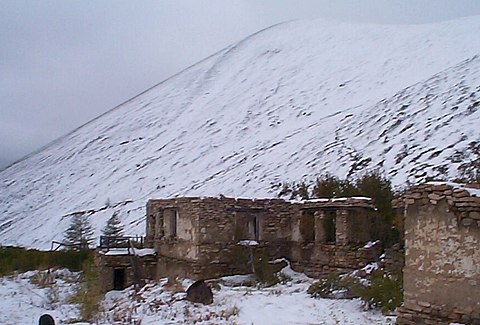
Butugychag Tin Mine – A Gulag camp in the Kolyma area
Butugychag Tin Mine – A Gulag camp in the Kolyma area
The initial efforts to develop the region began in 1932, with the building of the town of Magadan by forced labor.


четверг, 3 октября 2019 г.

The Dyatlov Pass incident- Discovery 2019 Documentary

The Dyatlov Pass incident (RussianГибель тургруппы Дятлова) refers to the deaths of nine skiers/hikers in the northern Ural Mountains, in the former Soviet Union, between the 1 and 2 February 1959, in uncertain circumstances. The experienced trekking group, who were all from the Ural Polytechnical Institute, had established a camp on the slopes of Kholat Syakhl, in an area now named in honor of the group's leader, Igor Dyatlov. During the night, something caused them to tear their way out of their tents and flee the campsite, all while inadequately dressed for the heavy snowfall and sub-zero temperatures.
After the group's bodies were discovered, an investigation by Soviet Union authorities determined that six had died from hypothermia while the other three showed signs of physical trauma. One victim had a fractured skull; two others had major chest fractures. Additionally, the body of another team member was missing her tongue and eyes. The investigation concluded that an "unknown compelling force" had caused the deaths. Numerous theories have been put forward to account for the unexplained deaths, including animal attacks, hypothermia, avalanchekatabatic windsinfrasound-induced panic, military involvement, or some combination of these.
VK Video- скачать с облака Discovery 2019 documentary in English with english subtitles

понедельник, 5 августа 2019 г.

The White Crow is a 2018 British film directed by Ralph Fiennes starring Oleg Ivenko as the ballet dancer Rudolf Nureyev

The White Crow is a 2018 British film written by David Hare and directed by Ralph Fiennes starring Oleg Ivenko as the ballet dancer Rudolf Nureyev.[1] It is inspired by the book Rudolf Nureyev: The Life by Julie Kavanagh."The White Crow lacks the nimble grace of its subject, but as a reasonably diverting primer on a pivotal period in the life of a brilliant artist, it just about sticks the landing."
скачать торрент на рус, англ с англ суб
с облака


воскресенье, 16 июня 2019 г.

Chernobyl is a 2019 five-part HBO-SKY British-American historical drama television miniseries


Chernobyl is a five-part British-American historical drama television miniseries created and written by Craig Mazin and directed by Johan Renck. It was a co-production between the American cable network HBO and the British television network Sky, and premiered in both the United States and the United Kingdom on May 6, 2019. The series depicts the Chernobyl nuclear disaster that occurred in the Ukrainian Soviet Socialist Republicin April 1986 and the unprecedented cleanup efforts that followed.
Chernobyl dramatizes "the true story of one of the worst man-made catastrophes in history and tells of the brave men and women who sacrificed themselves to save Europe from unimaginable disaster. The miniseries focuses on the heartbreaking scope of the nuclear plant disasterthat occurred in Soviet Ukraine in April 1986, revealing how and why it happened and telling the shocking, remarkable stories of the heroes who fought and fell."[1]
Chernobyl has received acclaim from critics. On Rotten Tomatoes, it has a 95% approval rating with an average score of 8.87 out of 10, based on 41 reviews. The site's critical consensus reads, "Chernobyl rivets with a creeping dread that never dissipates, dramatizing a national tragedy with sterling craft and an intelligent dissection of institutional rot."[14] On Metacritic, it has a weighted average score of 83 out of 100, based on 25 critics, indicating "universal acclaim".[15]

Reviewers from The AtlanticThe Washington Post and BBC have noted that the series successfully draw parallels to their contemporaneous society by focusing on the power of information and how dishonest leaders can unintentionally make mistakes beyond their comprehension. Sophie Gilbert of The Atlantic hailed the series as a "grim disquisition on the toll of devaluing the truth"; Hank Stuever of The Washington Post praised it for showcasing "what happens when lying is standard and authority is abused".[16][17][18]
торрент на англ с англ суб
с облака
The Chernobyl Podcast
Script - fb2 ebook


суббота, 20 апреля 2019 г.

The House of Government: A Saga of the Russian Revolution is a 2017 study of the history of the Russian Revolution by the Russian-born American historian Yuri Slezkine


The House of Government: A Saga of the Russian Revolution is a 2017 study of the history of the Russian Revolution, the formation of the Soviet Union, and its early history from the days of the New Economic Policy into the early days of Stalinist Rule by the Russian-born American historian Yuri Slezkine. The book consists of "three strains"[1]: "The first is a family saga involving numerous named and unnamed residents of the House of Government." The second strain is analytical. It looks at the revolution and subsequent Soviet administration through the lens of the millenarian cult and "aims to capture the rise and fall of Bolshevism through a building and its residents, via a study in eschatology – the creation of an apocalyptic cult, its unexpected success, and its equally unexpected failure."[2] "The third strain is literary...Each episode in the Bolshevik Family Saga, and each stage in the history of the Bolshevik prophecy is accompanied by a discussion of the literary works that sought to interpret and mythologize them."
PREFACE

During the First Five-Year Plan (1928–32), the Soviet government built a new socialist state and a fully nationalized economy. At the same time, it built a house for itself. The House of Government was located in a low-lying area called “the Swamp,” across the Moskva River from the Kremlin. The largest residential building in Europe, it consisted of eleven units of varying heights organized around three interconnected courtyards, each one with its own fountain.
It was conceived as a historic compromise and a structure “of the transitional type.” Halfway between revolutionary avant-garde and socialist realism, it combined clean, straight lines and a transparent design with massive bulk and a solemn neoclassical facade. Halfway between bourgeois individualism and communist collectivism, it combined 505 fully furnished family apartments with public spaces, including a cafeteria, grocery store, walk-in clinic, child-care center, hairdresser’s salon, post office, telegraph, bank, gym, laundry, library, tennis court, and several dozen rooms for various activities (from billiards and target shooting to painting and orchestra rehearsals). Anchoring the ensemble were the State New Theater for 1,300 spectators on the riverfront and the Shock Worker movie theater for 1,500 spectators near the Drainage Canal.
Sharing these facilities, raising their families, employing maids and governesses, and moving from apartment to apartment to keep up with promotions were people’s commissars, deputy commissars, Red Army commanders, Marxist scholars, Gulag officials, industrial managers, foreign communists, socialist-realist writers, record-breaking Stakhanovites (including Aleksei Stakhanov himself) and assorted worthies, including Lenin’s secretary and Stalin’s relatives. (Stalin himself remained across the river in the Kremlin.)
In 1935, the House of Government had 2,655 registered tenants. About 700 of them were state and Party officials assigned to particular apartments; most of the rest were their dependents, including 588 children. Serving the residents and maintaining the building were between six hundred and eight hundred waiters, painters, gardeners, plumbers, janitors, laundresses, floor polishers, and other House of Government employees (including fifty-seven administrators). It was the vanguard’s backyard; a fortress protected by metal gates and armed guards; a dormitory where state officials lived as husbands, wives, parents, and neighbors; a place where revolutionaries came home and the revolution came to die.
In the 1930s and 1940s, about eight hundred House residents and an unspecified number of employees were evicted from their apartments and accused of duplicity, degeneracy, counterrevolutionary activity, or general unreliability. They were all found guilty, one way or another. Three hundred forty-four residents are known to have been shot; the rest were sentenced to various forms of imprisonment. In October 1941, as the Nazis approached Moscow, the remaining residents were evacuated. When they returned, they found many new neighbors, but not many top officials. The House was still there, but it was no longer of Government.
It is still there today, repainted and repopulated. The theater, cinema, and grocery store are in their original locations. One of the apartments is now a museum; the rest are private residencies. Most private residencies contain family archives. The square in front of the building is once again called “Swamp Square.”
■ ■ ■

This book consists of three strains. The first is a family saga involving numerous named and unnamed residents of the House of Government. Readers are urged to think of them as characters in an epic or people in their own lives: some we see and soon forget, some we may or may not recognize (or care to look up), some we are able to identify but do not know much about, and some we know fairly well and are pleased or annoyed to see again. Unlike characters in most epics or people in our own lives, however, no family or individual is indispensable to the story. Only the House of Government is.
The second strain is analytical. Early in the book, the Bolsheviks are identified as millenarian sectarians preparing for the apocalypse. In subsequent chapters, consecutive episodes in the Bolshevik family saga are related to stages in the history of a failed prophecy, from an apparent fulfillment to the great disappointment to a series of postponements to the desperate offer of a last sacrifice. Compared to other sects with similar commitments, the Bolsheviks were remarkable for both their success and their failure. They managed to take over Rome long before their faith could become an inherited habit, but they never figured out how to transform their certainty into a habit that their children or subordinates could inherit.
The third strain is literary. For the Old Bolsheviks, reading the “treasures of world literature” was a crucial part of conversion experiences, courtship rituals, prison “universities,” and House of Government domesticity. For their children, it was the single most important leisure activity and educational requirement. In the chapters that follow, each episode in the Bolshevik family saga and each stage in the history of the Bolshevik prophecy is accompanied by a discussion of the literary works that sought to interpret and mythologize them. Some themes from those works—the flood of revolution, the exodus from slavery, the terror of home life, the rebuilding of the Tower of Babel—are reincorporated into the story of the House of Government. Some literary characters helped to build it, some had apartments there, and one—Goethe’s Faust—was repeatedly invoked as an ideal tenant.
The story of the House of Government consists of three parts. Book 1, “En Route,” introduces the Old Bolsheviks as young men and women and follows them from one temporary shelter to another as they convert to radical socialism, survive in prison and exile, preach the coming revolution, prevail in the Civil War, build the dictatorship of the proletariat, debate the postponement of socialism, and wonder what to do in the meantime (and whether the dictatorship is, indeed, of the proletariat).
Book 2, “At Home,” describes the return of the revolution as a five-year plan; the building of the House of Government and the rest of the Soviet Union; the division of labor, space, and affection within family apartments; the pleasures and dangers of unsupervised domesticity; the problem of personal mortality before the coming of communism; and the magical world of “happy childhood.”
Book 3, “On Trial,” recounts the purge of the House of Government, the last sacrifice of the Old Bolsheviks, the “mass operations” against hidden heretics, the main differences between loyalty and betrayal, the home life of professional executioners, the long old age of the enemies’ widows, the redemption and apostasy of the Revolution’s children, and the end of Bolshevism as a millenarian faith.
The epilogue unites the book’s three strains by discussing the work of the writer Yuri Trifonov, who grew up in the House of Government and whose fiction transformed it into a setting for Bolshevik family history, a monument to a lost faith, and a treasure of world literature.

вторник, 22 мая 2018 г.

In Memoriam of Richard Pipes 1923-17.05.2018 - Russia under the Old Regime (1974), The Russian Revolution (1990), and Russia Under the Bolshevik Regime (1994)


Richard Edgar Pipes (PolishRyszard Pipes; July 11, 1923 – May 17, 2018) was a Polish Americanacademic who specialized in Russian history, particularly with respect to the Soviet Union, who espoused a strong anti-communist point of view throughout his career.

Pipes wrote many books on Russian history, including Russia under the Old Regime (1974), The Russian Revolution (1990), and Russia Under the Bolshevik Regime (1994)  - скачать   
Pipes is known for arguing that the origins of the Soviet Union can be traced to the separate path taken by 15th-century Muscovy, in a Russian version of the Sonderweg thesis. In Pipes' opinion, Muscovy differed from every State in Europe in that it had no concept of private property, and that everything was regarded as the property of the Grand Duke/Tsar. In Pipes' view, this separate path undertaken by Russia (possibly under Mongol influence) ensured that Russia would be an autocratic state with values fundamentally dissimilar from those of Western civilization. Pipes argued that this "patrimonialism" of Imperial Russia started to break down when Russian leaders attempted to modernize in the 19th century, without seeking to change the basic "patrimonial" structure of Russian society. In Pipes's opinion, this separate course undertaken by Russia over the centuries made Russia uniquely open to revolution in 1917. Pipes strongly criticized the values of the radical intelligentsia of late Imperial Russia for what he sees as their fanaticism and inability to accept reality. 
Pipes stressed that the Soviet Union was an expansionisttotalitarian state bent on world conquest. He is also notable for the thesis that, contrary to many traditional histories of the USSR at the time, the October Revolution was, rather than a popular general uprising, a coup foisted upon the majority of the Russian population by a tiny segment of the population driven by a select group of intellectuals who subsequently established a one-party dictatorship which was intolerant and repressive from the start, rather than having deviated from an initially benign course. In Pipes's view, the Revolution was a total disaster, as it allowed a small section of the fanatical intelligentsia to carry out policies that were completely unrealistic.


InterculturalRUEN.mave.digital

Архив блога

Поиск по этому блогу

Tags

2018 World Cup 3D reading 7 Quotes - Intercultural Russian-English Profile активная грамматика активное слушание активный словарный запас английский и ИИ Апресян аудирование Влад Воробьев Гивенталь деловой английский детский английский ИИ-английский интернет-радио Константин Белобородов контекстный перевод коучинг по английскому массовая культура межкультурная коммуникация мобильное интернет-ТВ модальные глаголы мультсериал начинающие НБАРС нейросеть Облако-Mail.ru Олег Петров параллельные тексты перевод нейросети подкасты полнотекстовый поиск понимание просмотр фильмов на английском с опорой на словари прямой эфир разговорники рассылка расширение активного словарного запаса речевые модели скайп-тренинг словари слушание Современные записки Влада В. ссылки недели статистика Permlive Radio Татьяна Тутынина ТВ онлайн тематический словарь трехмерное чтение учебные материалы частотные слова электронные книги на английском энциклопедии AAC+ Abundance academic vocabulary active dictionaries active English active grammar active vocabulary advanced examples advanced grammar advanced patterns advanced vocabulary adventure film affirmation Africa Agatha Christie AI AiArt Al Jazeera Alain de Botton Alan Milne Alcyone Alexander Men' Alexander Pushkin aliens Alla Pugacheva Alreader Altai Amara.org Amazon Video american cinema american culture American English american frequent words american history american life American literature american politics American radio american tv Ancient Aliens ancient Rome Andrey Kneller Andrey Zubov Android animation Anton Chekhov Archangel Metatron Archangel Michael Archetype Archive.org art Atman ATOM audiobooks augustus awe Balabolka ballet Barak Obama basic active vocabulary BBC BBC English BBC Four BBC Learning English BBC News BBC One BBC podcasts BBC radio BBC REEL BBC Three BBC TV BBC Two BBC World BBC World Service Radio Beatitudes beginners Benedict Cumberbatch Bible Big Soviet Encyclopedia Bloomberg BlueDict Bolshoi Booker Prize Boosty.to/Omdaru Boris Akunin Boris Pasternak brainpickings.org Britannica british animation british cinema British council british english british history British literature British TV Brockhaus Buddha Bulgakov business business english business quotes Buy all my RU-EN podcasts- Купите все мои РУС-АНГЛ подкасты Byrne Caiaphas cambridge Cambridge Business Cambridge English Corpus Cambridge Learner's Dictionary English-Russian Career English Cassiopeia cassiopeia. russian spirits Cayce CBBC CBC CBeebies CBS Central America Chaitanya Channel 4 channeling ChatGPT Chekhov Chernikhovskaya chess chick-lit Chico Xavier childen children children's literature China chm christianity Christmas Cicero citizen journalism civilisation claude.ai Click CNBC CNN coaching COCA Collins Collins Cobuild collocations Columbia encyclopedia comedy-drama commandments Consciousness Constance Garnett context dictionary cooking coronavirus courses culture death Deepseek DeepSeek retelling design detective story dictionaries dictionary Dispenza Dmitry Bykov Doctor Who docudrama donation to Russian World Citizens Project Dostoevsky dramatizations Dream Media English Club DW ebooks ebooks in English ego elibrary Elizabeth II email-рассылка Emily Wilson emotions Encarta encyclopedia English Club TV English language english literature english subtitles enlightenment entertainment ereader errors ESL ESL audio ESL Links ESL video Esperante radio Esperanto essays Eugene Onegin Eurasianism Euronews examples exams Extra English extraterrestrial civilizations Facebook Live Family English fantasy fascism fb2 FBreader fear feelings fiction in English Files of the week Filmon.TV Films films in English with english subtitles financial energy Flipboard folklore food Fox news Fox TV France France 24 French literature french-english podcasts frequency frequent words Friends future Fyodor Dostoevsky Gabriel Gagarin Radio Game of thrones german history German literature german TV global issues Glosbe god Goddard Neville Goldendict good luck Google dictionary Google Podcasts google translate grammar grammar patterns gulag Hamatata.com happiness Harry Potter HBO Higher Self highlights of the year 2011 history History channel Hollywood Holy Spirit Homer horror House of the Dragon human origins hybrid literature ideas idioms IELTS imperialism India innovation inspirational quotes Intercultural RU-EN Intercultural RU-EN 24 Intercultural Ru-EN LIVE Intercultural RU-EN Youtube Channel Intercultural Youtube News Mix intermediate grammar intermediate vocabulary internet radio iOS IPTV Ireland IT Italian literature ITV Ivan Bunin J.H.Lowenfeld James Falen Jane Austen Jesus Jesus Christ job interview Joe Vitale Joehle John O'Donohue John O’Donohue John of Kronstadt John Randolph Price Joseph Brodsky Josiah journalism Judas kids Kindle Kindle Paperwhite King David Kiwix korean cinema Krishna learner's dictionaries Leo Tolstoy Lingualeo Linguee Lingvo Links List.ly listening literature live radio Live TV London Live TV Longman Longman Business love Lucifer Lyudmila Ulitskaya m3u machine translation Macmillan Magicscope Magicscope PermLIVE Mastodon Match-Point MDict MDX dictionaries media coach meditation Merriam-Webster Messing Metacritic Michele Berdy Microsoft Mikhail Bulgakov Milne mistakes mobi mobile dictionaries Mobile films mobile podcasts Mobile TV Moses Mosfilm motivational quotes motoring mp3 courses MSNBC multimedia Multiran musical Mystery Natural grammar nature photography NBC Netflix neural translation News News English News with subtitles Nikolai Gogol Nobel Lecture Nobel Prize nonfiction NPR OED Omdaru English Media Club Omdaru literature Omdaru radio online films in English online TV Open Russia opera Ororo.tv Orwell Osip Mandelstam Oxford Oxford Advanced Learner's Dictionary Oxford Basic American dictionary Oxford Business Oxford Learner's Wordfinder Dictionary Oxford Living English Dictionaries painting parallel texts Pasternak Paul PBS Peppa Pig Permlive Internet Radio Project Permlive radio PermLIVE.Info Permlive.TV World Magazine PetroFFEnglish Pevear-Volokhonsky philosophy phrasal verbs phrase books Pilate Pixar podcasts podster.fm poetry Political novel Portable positive psychology post-apocalyptic prayer pre-intermediate pre-intermediate grammar presentations project management propaganda Prophet Enoch Prosperity Psalms psychology Public Folder Putinism quotations radio radio in English reincarnation Renan Reuters TV Reverso Context Richard Pipes Robert Harris Roman Empire Rowling RSS Russia Russia in English Russia Today Russian russian archetype russian art russian cinema russian collocations russian culture russian empire russian frequent words russian grammar russian history russian jews Russian language russian life - quotes Russian literature Russian music russian nationalism russian opera russian painting Russian poetry russian politics russian radio russian revolution russian subtitles russian TV russian usage Russian World Citizens Live TV Russian World Citizens Project Russian World Citizens Project Links 2012-2019 russian-english audibooks russian-english dictionary russian-english parallel texts russian-english phrase books russian-english podcasts russian-english translation russian-german podcasts Sathya Sai Baba sci-fi science science fiction Shakespeare Sherlock short story Siberia Simple English sitcom Sky News slang SLOVO Slow TV Sophie Kinsella soul sound examples soviet art soviet cinema soviet history Soviet life soviet music soviet sci-fi Soviet Union spanish cinema speech patterns spirit spiritism spirits spirituality spoken english Spoken examples Spotify spy thriller Sri Chinmoy Stalin stalinism Stephen Fry Strugatsky Student News subasub.com subscribe.ru supernatural Svetlana Alexievich Svetlanov synonyms Taiga Tarkovsky Tatoeba-предложения в переводе Tchaikovsky Tcherniakov technology TED teen drama Telegram Terry Gross text-to-speech The Best of 2019 links The Best of 2020 links The Great Soviet Encyclopedia the Idiot The Master and Margarita The Moscow Times The New Testament The New York Review of Books The New York Times The New Yorker The News The Philosopher's Mail The Russian World Citizens Times The School of life The Secret theatre thematic dictionary thesaurus This American life thought thriller time time travel TOEFL Tolkien Tolstoy Torrent TV torrents tourism training translation translations True Self trumpism TV documentaries TV in English TV series tyranny UFO UK UK TV Live Universalis universe Upper-intermediate grammar Urantia Urban Dictionary usage USSR Vasabi.tv Vice News video Video News visual dictionary visual grammar Vladislav Vorobev VOA Learning English VOA special English vocabulary vocabulary.com VPN Vysotsky walsch Walt Disney War and Peace Wednesday Wikipedia wikitaxi Williamson Win-Win News Win-Win radio Windows Winnie-the-Pooh Woland wonder Wordnet WorkAudioBook-audioplayer with subtitles World Book World News Yahweh Yourmuze.FM Youtube Youtube vblogger Zhivago Zoom coaching Zoroaster